Building Presence Where It Matters: Consolidating Binational Arks
The initiative Jaguar Rivers is turning vision into reality, one hectare/acre at a time. Across the Alto Iguazú and Alto Bermejo Binational Arks, partner organizations are racing to close the gaps between protected areas before jaguars vanish from these corridors for good—while a new leadership school is training the next generation of conservationists to carry our work forward.
Jaguar Rivers unites four grassroots organizations in South America’s first continental-scale effort to restore, reconnect, and protect the Paraná River Basin. Our guiding principle is that rivers should not serve as borders between nations, but as living corridors that connect them.
Within the territorial strategy that underpins the vision of Jaguar Rivers, Arks are a key pillar. They are well-conserved areas with full ecological functionality that anchor biodiversity and wildlife populations, including apex predators such as the jaguar. Arks are where the four partner organizations of the Jaguar Rivers have committed to being present on the ground. Our goal is to ensure that these places can thrive and become sources of biodiversity that will eventually spill over into the rest of the Paraná River Basin. Here are the latest updates on how we are growing and deepening our presence on the ground:
ALTO IGUAZÚ: IMPROVING THE DESIGN OF A BINATIONAL ARK
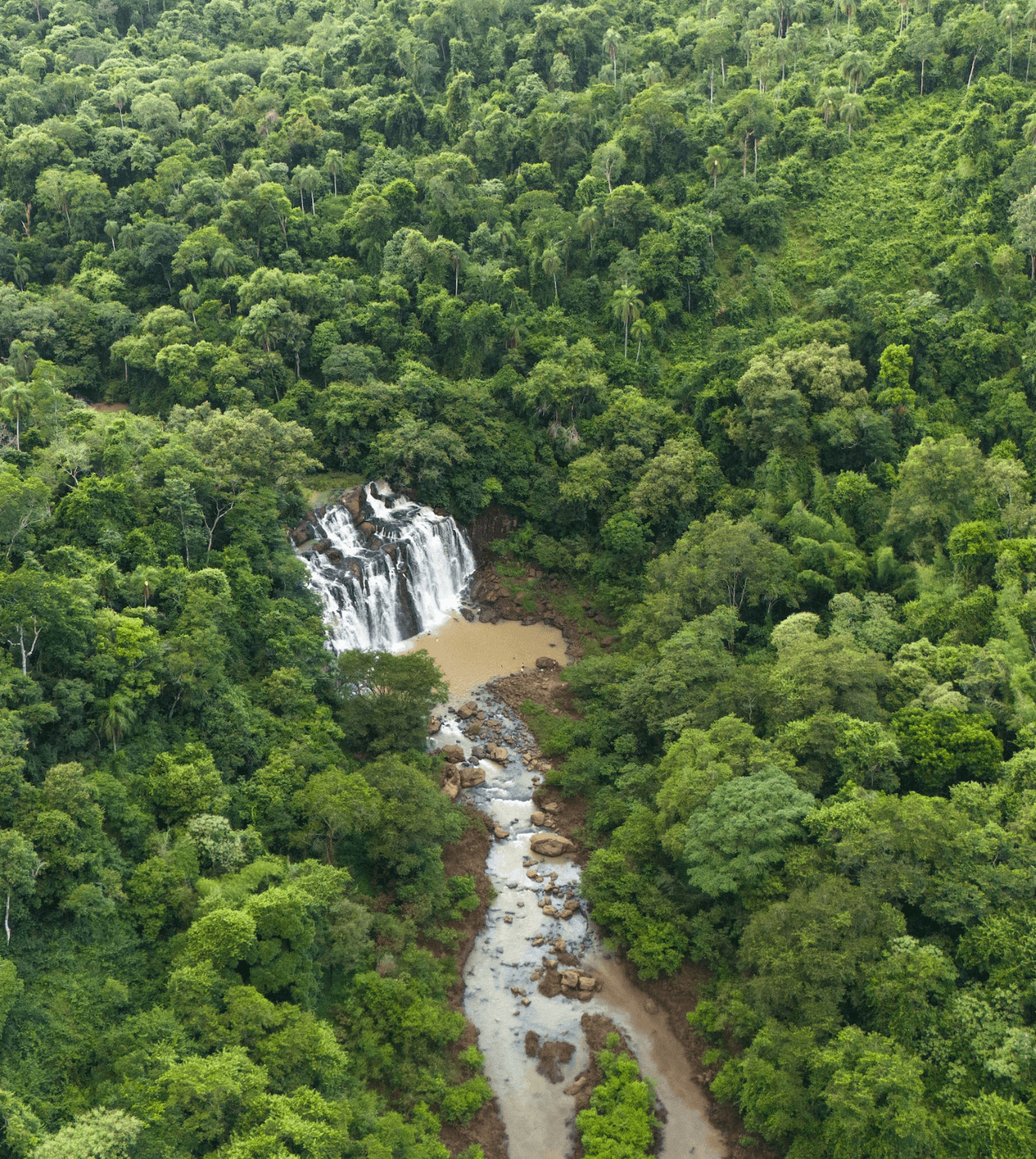
The Iguazú-Iguaçu binational park complex, a World Heritage Site spanning Argentina and Brazil, protects one of the largest remaining strongholds of the Atlantic Forest, along with its iconic waterfalls. Including the Argentine Urugua-í Provincial Park, the continuous forest covers over 320,000 hectares (approximately 791 acres). Although vast, this protection is flawed by design.
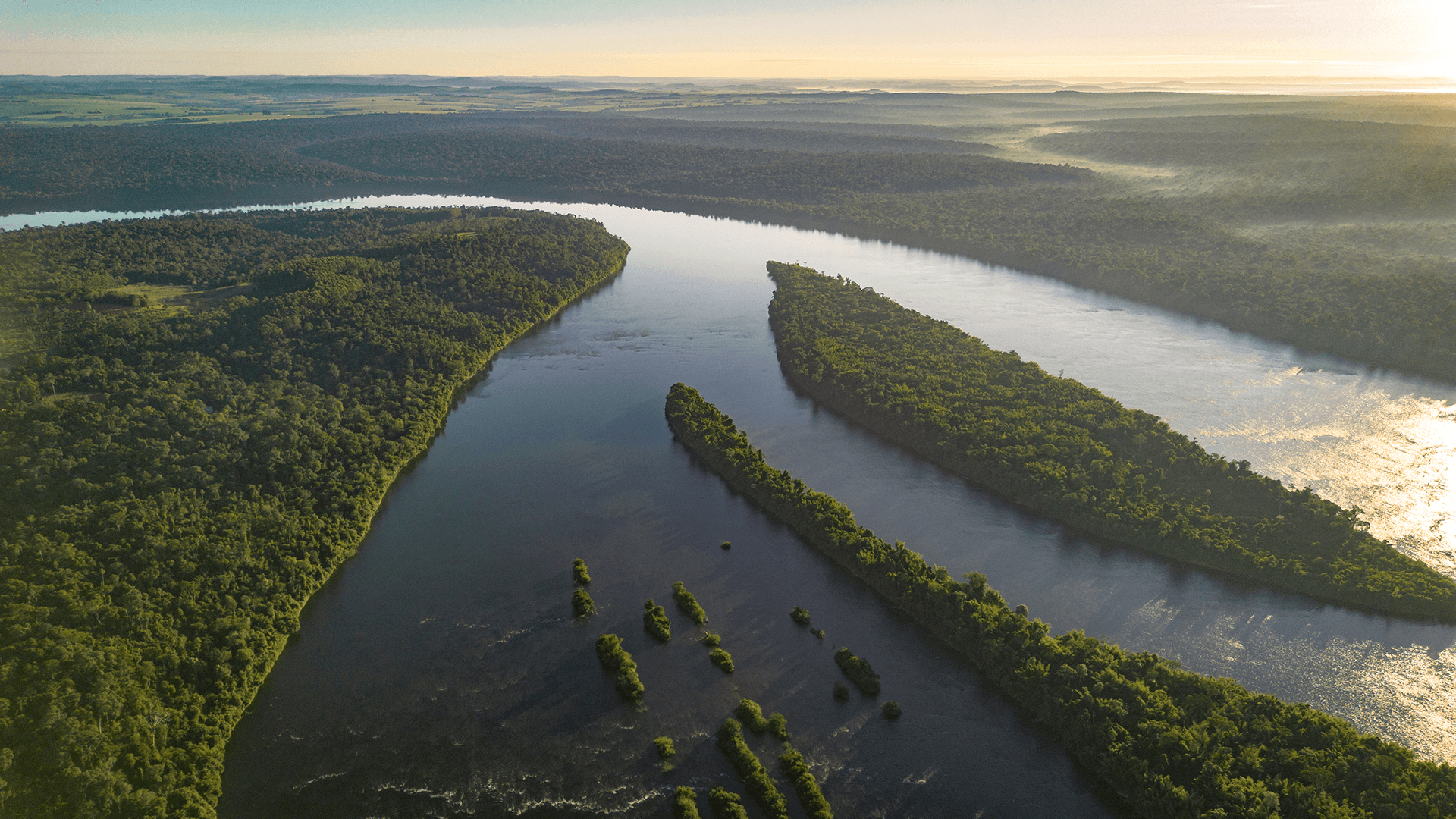
On both sides of the river, deforestation, poaching, illegal logging, cattle encroachment, and forest fragmentation are intensifying. In an ecosystem designed for movement, lack of connectivity disrupts its natural dynamics. The jagged shape of these protected areas creates what is known as a border effect. When this occurs, wildlife is forced to live along the edges, where it becomes more vulnerable to poaching.
Currently, jaguar populations inside the parks are not growing, signaling that if the current trend continues, we risk their disappearance from the area in the coming decades.
In response, Rewilding Argentina and Onçafari are working to protect this ecosystem from both sides of the river. At Jaguar Rivers, our purpose is to connect and coordinate these efforts in order to strengthen this territory as a living core from which species can roam beyond political boundaries through the natural corridors rivers represent.
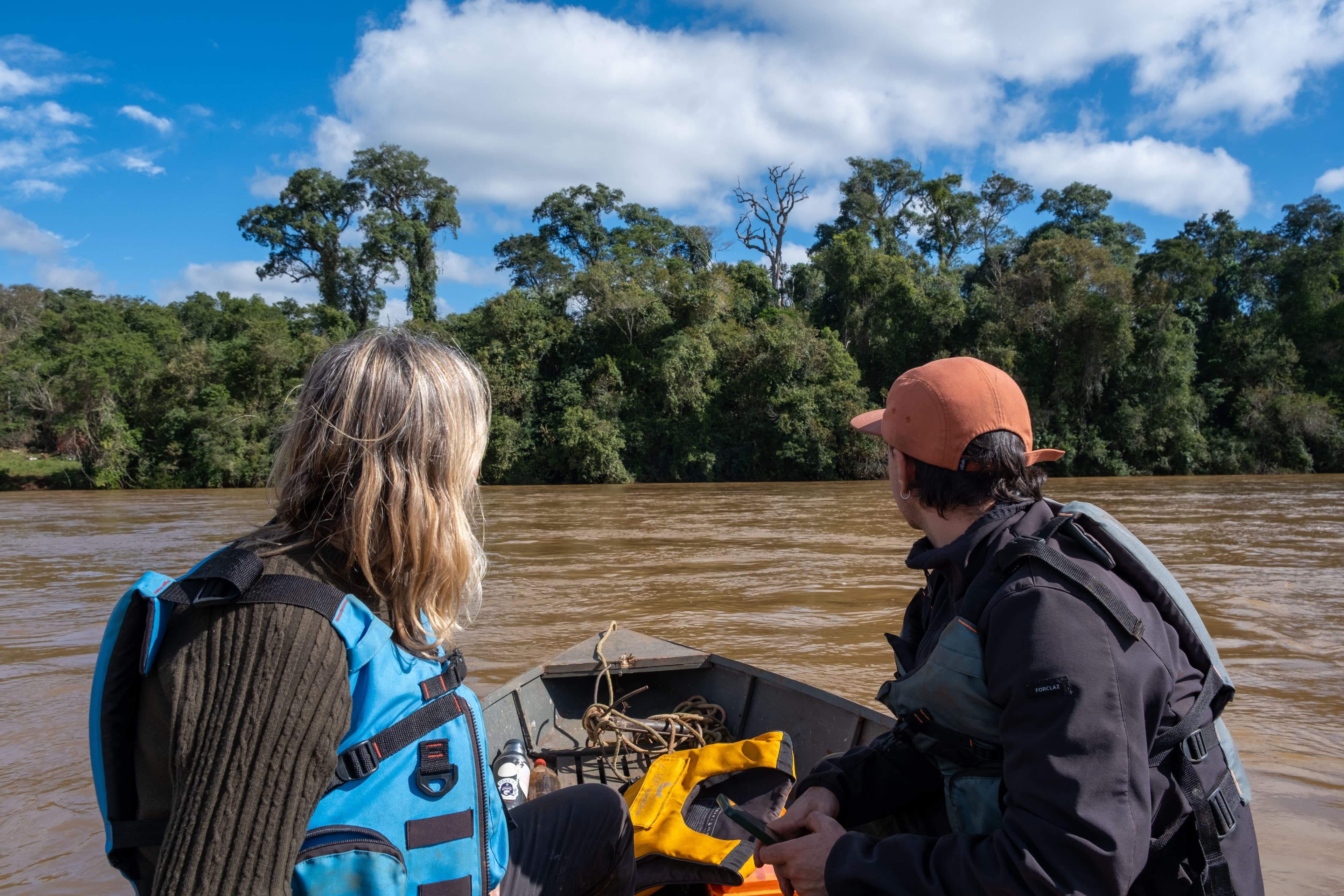
As an initial step, in November 2025, Rewilding Argentina acquired its first property of 160 hectares (approximately 400 acres), on the Andresito Peninsula, directly opposite Iguazú National Park in Brazil. This critical area is a bottleneck at the narrowest section of the binational Ark. In April, another 56-hectare (138-acre) property was secured, expanding the protection of this vital wildlife corridor.
In June 2026, Onçafari announced the acquisition of its first privately owned area in the Atlantic Forest further to the east. Located in the municipality of Capanema, Paraná, along the banks of the Iguazú River, the new 12-hectare (30-acre) reserve marks a significant milestone in the organization’s expansion into one of the most biodiverse and threatened biomes on the planet. This marks the start of on-the-ground implementation for Jaguar Rivers in Brazil. The announcement was made in Curitiba during the National Conference on Biodiversity Conservation Units (UCBio 2026), alongside the official launch of the Jaguar Rivers Initiative in Brazil.
ALTO BERMEJO: PUZZLING TOGETHER A BINATIONAL ARK
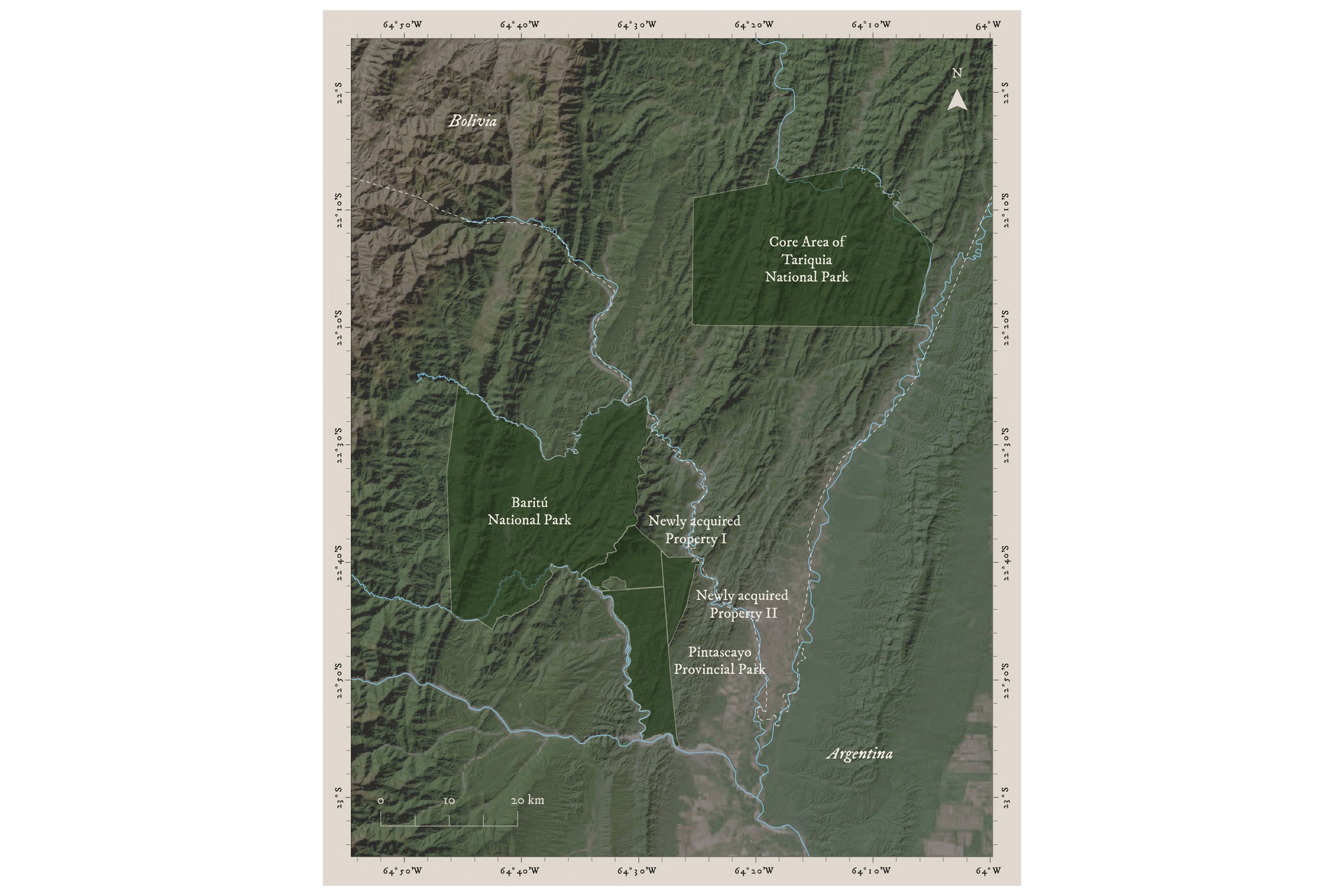
On the misty eastern slopes of the Andes lies the Alto Bermejo watershed—the future Alto Bermejo Binational Ark. This Ark is currently composed of three large protected areas located on either side of a political border: in Argentina, Baritú National Park holds a pristine 72,439-hectare (approximately 179,000 acres) reserve of Cloud Forest while Laguna Pintascayo Provincial Park protects another 12,139 hectares (approximately 30,000 acres); in Bolivia, the core area of Tariquía Nature Reserve extends over 40,000 hectares (almost 100,000 acres).
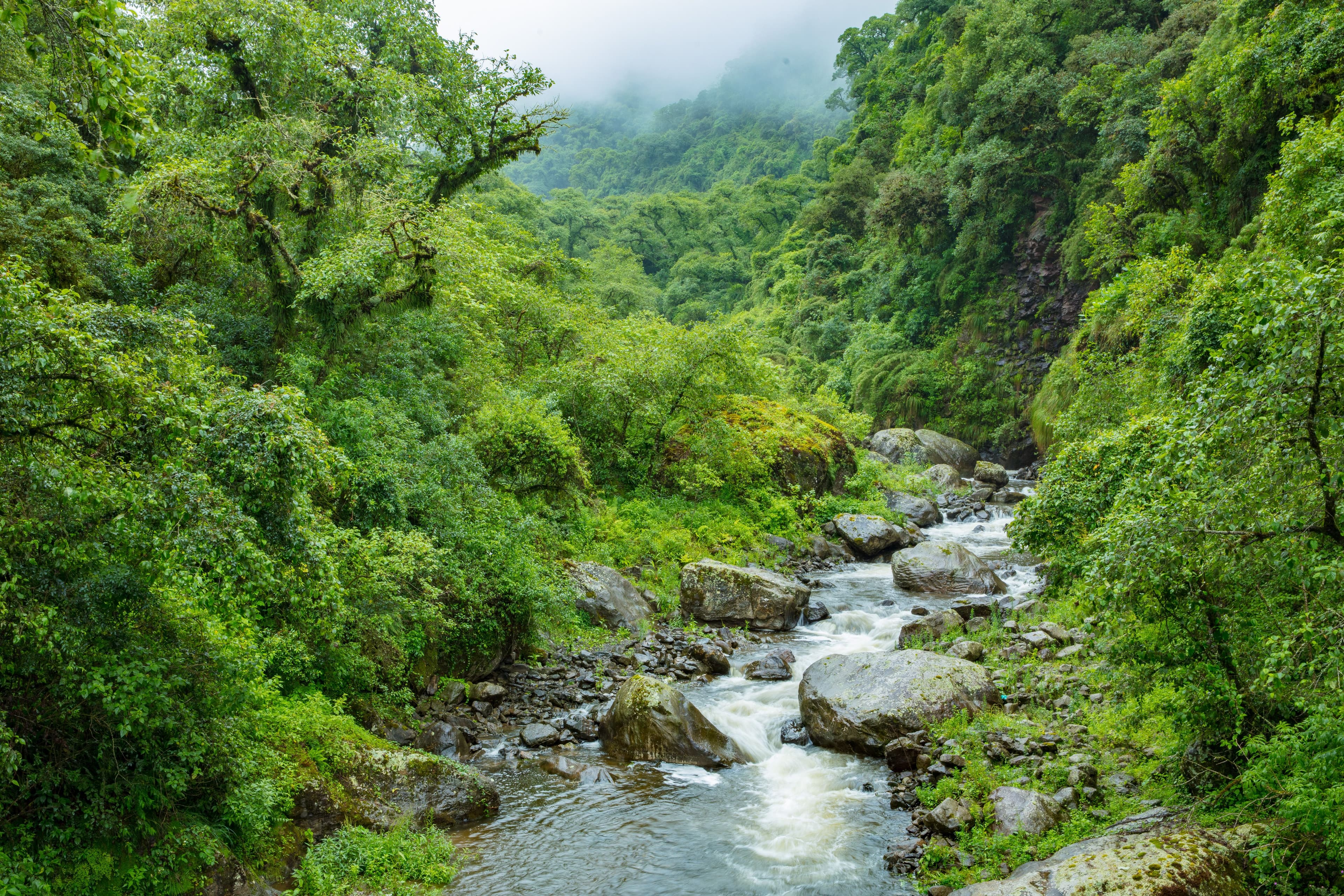
Our mission is to close the gaps between these protected areas through the acquisition of strategic territories that can serve as biodiversity corridors, ensuring their long-term legal protection. Jaguar Rivers envisions a near future where the cloud forest and all its inhabitants can once again flourish along the shores of the Bermejo River as it becomes one continuous corridor of life.
Already in Argentina, a 4,016-hectare (9,923 acres) property was acquired by Rewilding Argentina, connecting Baritú National Park with Laguna Pintascayo Provincial Park, creating a continuous protected landscape of over 93,000 hectares (230,000 acres). A core team is now working on jaguar monitoring, biodiversity surveys, and initial threat assessments. In early July, an additional property of 3,900 hectares (9,637 acres) was acquired by Rewilding Argentina, reestablishing the link between the protected area and the Bermejo River. Across the waters, the Bolivian shores of the Bermejo await as the next protection goal. Nativa is currently working on establishing its first base camp.
ESCUELA IBERÁ (THE LEADERSHIP SCHOOL FOR NATURE) LAUNCHES ITS FIRST COURSE: MONITORING & CAPTURE OF BIG CATS
Escuela Iberá was created with the goal of strengthening conservation capacity in South America. Building on the success of the Iberá Ark and the lessons learned by Rewilding Argentina over the past 20 years in the field, the school seeks to promote our nature-based economy model weaving together parks, wildlife, restorative economies and community wellbeing.
Escuela Iberá delivered its first course: Monitoring & Capture of Big Cats, a two-month immersion program designed to train future technical leaders from Bolivia and Paraguay. The course unfolded in four stages, ranging from daily work at biological stations to participating in a real puma capture in Patagonia. Nine professionals from both countries took part in the training program, guided throughout by Rewilding Argentina, who shared their long trajectory in wildlife conservation and management.
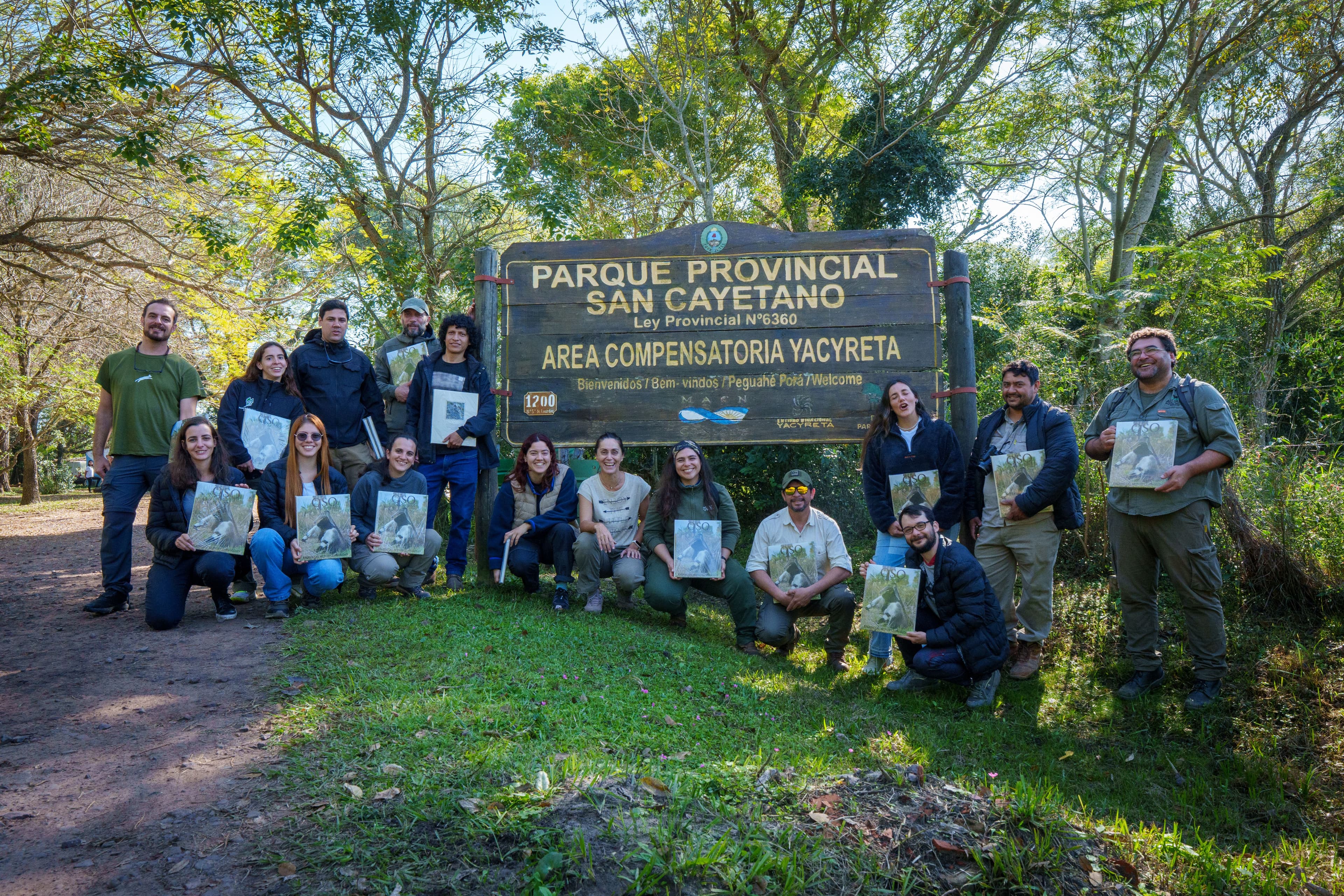
Beyond offering a technical training program, this first cohort has laid the groundwork for the creation of a regional network of professionals dedicated to protecting big cats across South America. Escuela Iberá is now preparing its next course, launching in July and focused on the four complementary pillars of our nature-based economy model.
FOUR ORGANIZATIONS, ONE RIVER: THE FIRST JAGUAR RIVERS GATHERING
Between 4 and 7 July, members of the four partner organizations of Jaguar Rivers met at the headquarters of Rewilding Argentina in the Iberá Ark. Through a range of activities, including communication campaigns, media training, and Geographic Information System (GIS) monitoring, the group engaged in interdisciplinary work to align strategies for preserving the Paraná River basin, with particular attention to the upcoming 15-day Paraguay River Expedition.
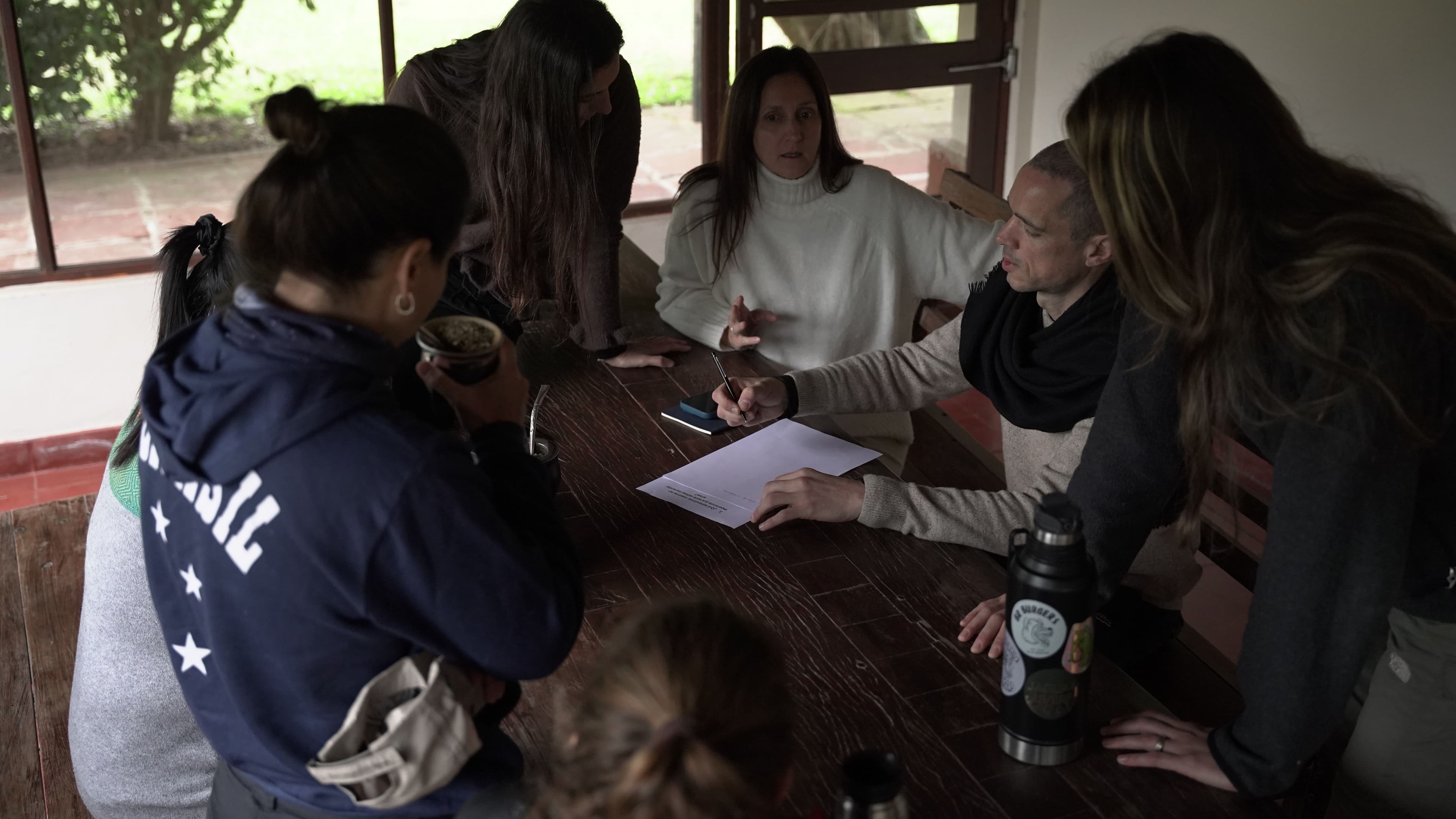
This August, the first expedition along the Paraguay-Paraná river axis will set out with an ambitious goal: connecting the Pantanal Ark with the Iberá Ark. The journey will establish the first water quality baseline for this corridor, feeding directly into the Jaguar Rivers GIS, while also mapping the threats facing the basin along the way. Alongside this, the expedition will begin documenting the river's biological and social diversity—capturing the communities and ways of life woven into its waters.
FROM THE PARANÁ TO THE WORLD & BACK: A SEASON OF GLOBAL LAUNCHES & INTERNATIONAL APPEARANCES
After building on the ground, Jaguar Rivers is now gaining international momentum. Over the past several weeks, the initiative was celebrated through several landmark events across London, Valencia, New York, Curitiba and San Diego—each marking a new chapter in the effort to protect South America’s great life corridors.
April.
JAGUAR RIVERS LAUNCH AT THE SCIENCE MUSEUM IN LONDON, UK
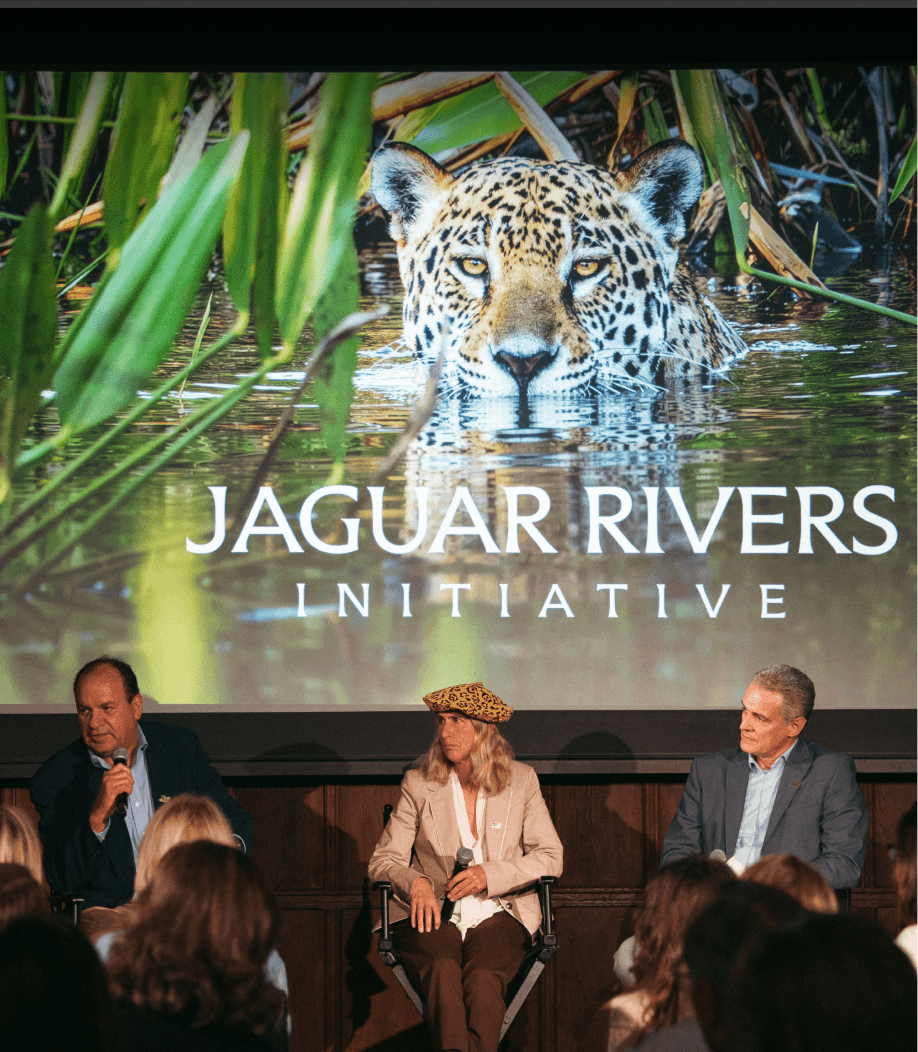
Jaguar Rivers was officially launched at the Science Museum in London, bringing together over a hundred guests to celebrate an ambitious vision for continental-scale conservation.

The program included a panel moderated by David Fein, featuring the CEOs of the four partner organizations: Sofía Heinonen (Rewilding Argentina), Mario Haberfeld (Onçafari), Iván Arnold (Nativa Bolivia), and Yan Speranza (Fundación Moisés Bertoni), who discussed ecological connectivity, river protection, and building a shared conservation agenda for the continent. Sir Ian Blatchford, Director of the Science Museum, and curator Ana Ferrari also spoke at the event, followed by a guided tour of the Water, Pantanal, Fire exhibition—a visual journey into the beauty, fragility, and urgency of protecting the Pantanal.
“It is a compelling example of how international collaboration, grounded in science and determination, can rise to meet some of the great challenges of our time.”—Sir Ian Blatchford, Director of the Science Museum in London.
May.
JOINING THE ECTI CONFERENCE IN VALENCIA, SPAIN
Sofía Heinonen introduced Jaguar Rivers at the Effective Conservation in Action Initiative (ECTI), a three-day gathering of conservationists sharing practical knowledge about leading large-scale conservation efforts.
The event coincided with Sir David Attenborough’s 100th birthday, and as participants shared the day with representatives from Australian Wildlife Conservancy, African Parks Network, Rewilding Europe, American Prairie, and others, his words carried special weight:
“If working apart we are a force powerful enough to destabilise our planet, surely working together we are powerful enough to save it.”
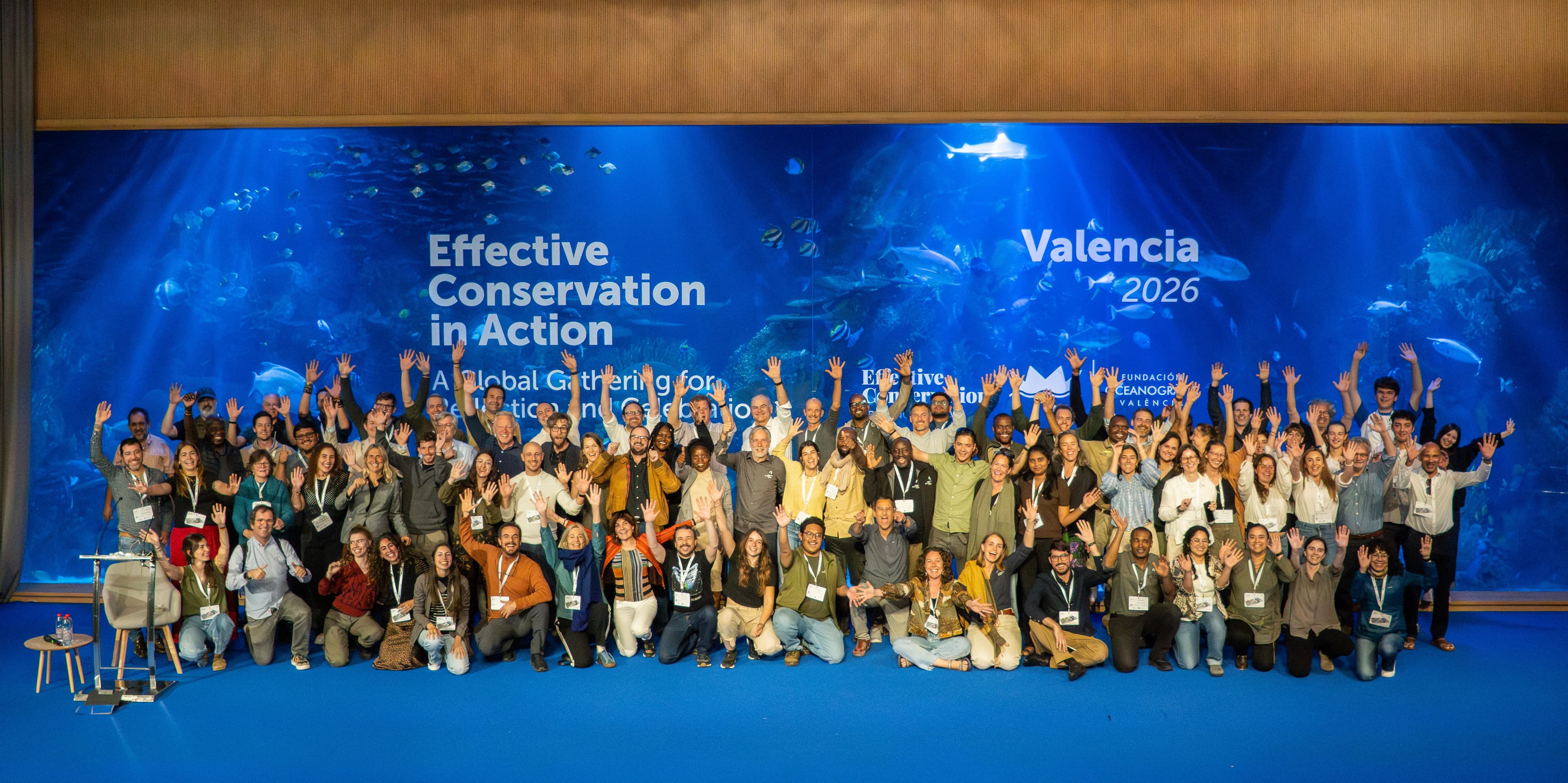
We celebrated our powerful shared vision for global conservation, deeply aligned with Jaguar Rivers’ mission to blur borders and strengthen collaboration across territories and communities.
ACCOMPANYING TOMPKINS CONSERVATION AT THE EXPLORERS CLUB & THE ASIA SOCIETY IN NEW YORK, USA
Kris Tompkins, president and co-founder of Tompkins Conservation, presented her talk “Wild Beyond Borders” at the Asia Society, highlighting upcoming continental projects in partnership with Jaguar Rivers, Rewilding Argentina and Rewilding Chile. She also received The Explorers Club Medal (Exploration’s Highest Honor) for wilderness protection & biodiversity restoration across the globe. Together we unveiled our shared continental vision, a rewilded South America.
June.
JAGUAR RIVERS LAUNCH AT THE UCBIO IN CURITIBA, BRAZIL
As part of the National Conference on Biodiversity Conservation Units (UCBio) in Curitiba, Jaguar Rivers was officially launched in Brazil, led by Onçafari and bringing together all four partner organizations.
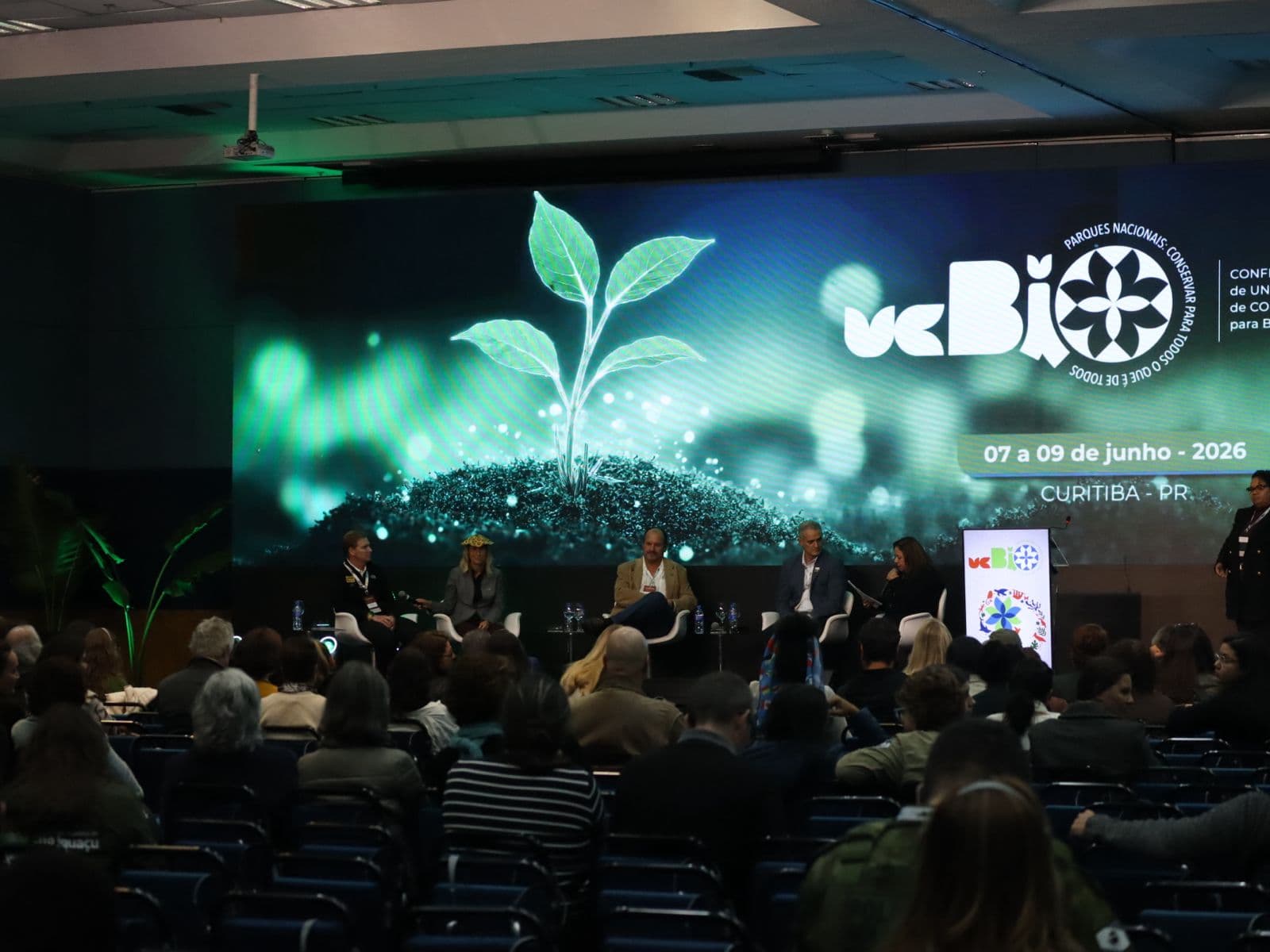
Mario Haberfeld, founder of Onçafari, spoke about the importance of this living corridor that crosses borders — and the need to restore, connect, and protect more than 2.5 million square kilometers along the Paraná River basin, an area roughly twice the size of Alaska, positioning this vision as the future of the watershed.
July.
PARTICIPATION AT ESRI USER CONFERENCE 2026 IN SAN DIEGO, USA
Jaguar Rivers was featured at the Esri User Conference 2026, the world’s largest gathering dedicated to GIS, where Tompkins Conservation, Rewilding Argentina, Rewilding Chile, and Jaguar Rivers presented the ecological restoration and conservation work driving their vision for South America. As part of the conference, Kristine Tompkins, delivered the keynote address during the plenary session to an audience of approximately 20,000 people.
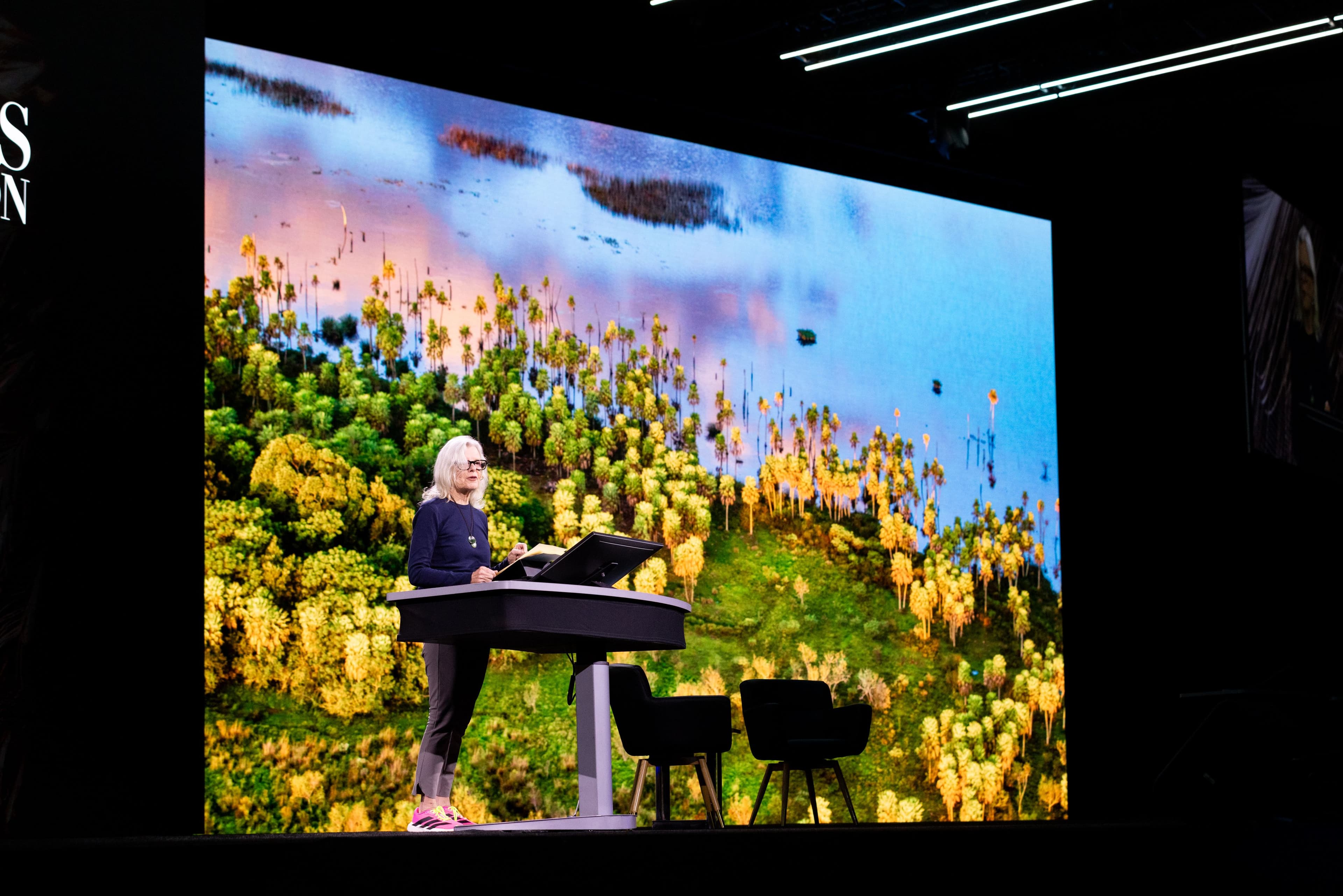
At the Tompkins Conservation stand in the map gallery, two continental projects took center stage—the Andean Corridor and Jaguar Rivers—bringing thousands of attendees closer to a vision of ecosystem protection and reconnection powered by geospatial tools applied to conservation. The organizations’ participation also included a series of activities aimed at spreading awareness of rewilding and strengthening ties with the international geographic information community.